What is AIOps root cause analysis?
AIOps root cause analysis is the use of AI to determine why a production system failed, not just that it failed. Instead of paging a human to correlate dashboards, logs and recent changes by hand, an AI investigator gathers those signals itself, forms hypotheses, tests them against the evidence, and returns a conclusion a human can verify. The output that matters is not a prettier alert. It is an answer: what broke, what caused it, and what to do about it, with every claim linked to the data that supports it.
Why does traditional alerting fail at finding root causes?
Monitoring is built to detect symptoms, and it is good at that. The problem starts after detection. A single failing deployment can fire dozens of alerts across services, and each alert arrives with no context about the others. The on-call engineer becomes the correlation engine: opening Grafana, grepping logs, checking recent rollouts, asking in Slack who deployed what. That work is repetitive, slow at 3 AM, and it does not scale with the number of services. Alert fatigue is not a discipline problem; it is a structural one. The signals are separated from each other exactly when they need to be read together.
How does an AI investigation actually work?
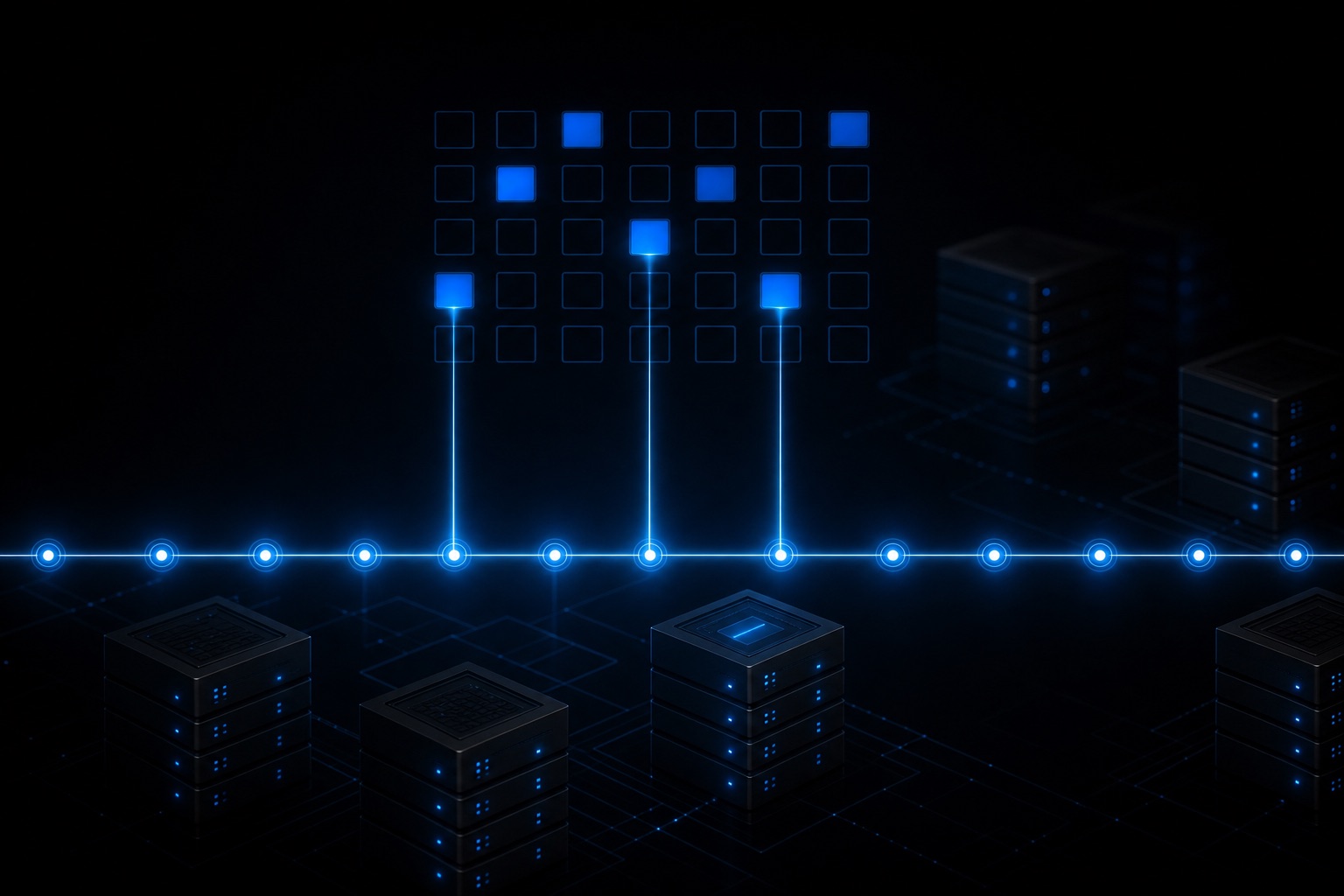
Alertmanager fires; the agent picks it up instantly
pods, logs, events, recent rollouts, metrics
signals read together, causes ranked
root cause plus the data that proves it
The investigation mirrors what a senior engineer does, at machine speed. The agent pulls the crashing pod's state and last logs, checks whether a rollout preceded the alert, compares resource consumption against limits, and looks at cluster events for eviction or scheduling problems. Each hypothesis is kept or discarded based on evidence. A memory-limit hypothesis survives only if the metrics actually show the container hitting its limit. The result reads like a good incident writeup: OOMKilled, memory limit 256Mi exceeded after Tuesday's rollout doubled cache size, recommendation to raise the limit or fix the cache, with links to the exact logs and metrics behind each sentence.
What should an evidence-backed RCA report contain?
- The root cause, stated in one line a non-specialist can read.
- The evidence, with direct links to the logs, metrics and events that support the conclusion.
- The blast radius: which services and users were affected, and for how long.
- A recommended fix, ideally as a ready GitOps pull request reference.
- Time to RCA, so you can measure whether the system is actually getting faster.
How do you evaluate AIOps RCA tools?
Four criteria separate serious tools from demos. First, safety: the investigator should be read-only by design, physically unable to mutate your cluster while it investigates. Second, evidence: every conclusion must link to the underlying data, because an unverifiable answer is worse than no answer. Third, coverage: it should pick up every alert automatically, not only the ones someone routes to it. Fourth, time to RCA as a measurable number: minutes, not the hours a human investigation takes. Pricing models matter too: per-alert pricing punishes you for having good monitoring.
How we run RCA at Digital Care
Metatron, our AI infrastructure control plane, investigates every Kubernetes alert this way in production: read-only, evidence-backed, with the report landing in Slack in minutes. On a high-traffic reviews aggregator platform it investigates 100% of alerts with a typical time to RCA under four minutes; the full story is in the case study. When teams want the loop closed, not just explained, Verdict takes the next step: the fix ships as a human-approved pull request and is machine-verified after merge.